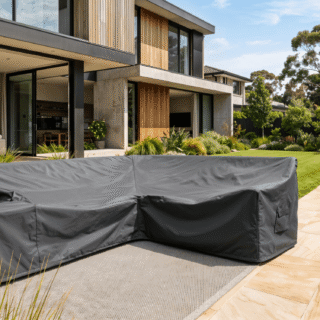


Ask anyone who’s owned a barbecue for more than a year or two, and they’ll tell you the same thing: it’s rarely the cooking that wears a BBQ out. It’s everything that happens to it when the lid’s down and nobody’s watching — the sun bleaching the hood, the rain finding its way into the burners, the salt air eating through the fittings quieter than you’d expect.
Australia doesn’t do “average weather” particularly well. What protects a barbecue in Perth will barely touch the sides in Cairns, and what works in Melbourne needs to handle four seasons some weeks all in the one afternoon. So rather than pointing you to one generic cover, it’s worth understanding what your specific climate is doing to your BBQ — because that’s what should be driving the decision.
Why “Any Cover Will Do” Doesn’t Hold Up Here
A cheap, thin cover might keep dust off in a mild climate, but Australian conditions ask more of it. UV degrades fabric far faster here than in most parts of the world — our summer UV index regularly sits in the extreme range, and a cover without real UV resistance will crack, fade, and lose its waterproofing within a season or two. Add in the humidity of the north, the salt air along the coastline, and the wide temperature swings of the south, and it becomes clear why the right BBQ cover needs to be chosen for your region, not just your budget.
Queensland: Built for Humidity and Rain
If you’re in Brisbane, the Gold Coast, or further north, humidity is the real enemy — more than heat itself. Moisture that gets trapped under a cover without proper airflow turns into the perfect environment for mould and mildew, and once that sets in on a barbecue’s fabric or fittings, it’s a hard cycle to break.
Look for covers with vented panels or breathable fabric backing, which let warm, damp air escape rather than sit against the metal. Fully sealed, non-breathable covers might seem more protective on paper, but in Queensland’s climate, they often do more harm than good. Pair that with a fabric that resists mildew growth, and regular cleaning between uses, since trapping moisture and grime together under a cover is a fast track to problems.
Sydney: Rain and UV in Equal Measure
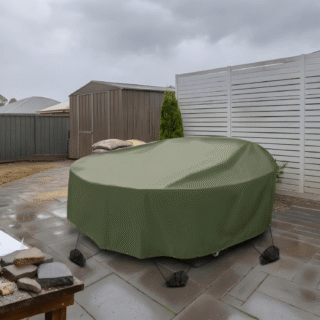
Sydney’s climate is a genuine dual challenge — enough rain across the year to demand real waterproofing, and enough sun exposure, particularly through summer, to test any cover’s UV resistance. A cover that only handles one of these well won’t last.
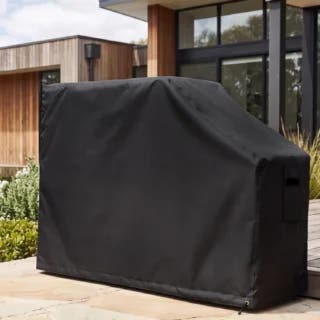
The fabric to look for here is a solution-dyed, UV-stabilised material with a waterproof or water-resistant coating and properly sealed seams — stitching is often where water gets in first, long before the main fabric fails. A grill cover that combines both properties will hold its colour and its water resistance well beyond a cover built for just one condition.
Melbourne: Changeable Weather Needs Versatility
“Four seasons in one day” isn’t just a saying in Melbourne — it’s a genuine design consideration for outdoor gear. A cover here needs to handle sudden rain, strong wind, and reasonably intense UV, sometimes within the same afternoon.
This is where fit and fixings matter as much as fabric. A cover with secure straps or elasticated hems stops it lifting in Melbourne’s notoriously gusty conditions, while a mid-weight, all-purpose fabric with both UV and water resistance covers the bases without being overengineered for any one extreme. Versatility, more than specialisation, is the priority here.
Popular Products


Strong UV, Dry Heat, and Fading : Perth and much of Western Australia deal with long stretches of intense, dry UV exposure — arguably the toughest test for fabric longevity anywhere in the country. Cheaper covers fade, stiffen, and become brittle far faster under this kind of consistent sun than they would almost anywhere else.
A heavy-duty, UV-stabilised fabric is non-negotiable here — look specifically for covers rated for high UV exposure rather than general-purpose water resistance. Dry heat also means less concern about mould, so airflow matters less than sun protection when you’re choosing between options.
Coastal Areas: The Salt Air Problem
Wherever you are around the coastline — northern beaches, the Sunshine Coast, coastal WA — salt air is its own category of wear. It doesn’t just affect the BBQ’s metal components; it can degrade certain fabric coatings and hardware like zips, buckles, and grommets faster than inland conditions would.
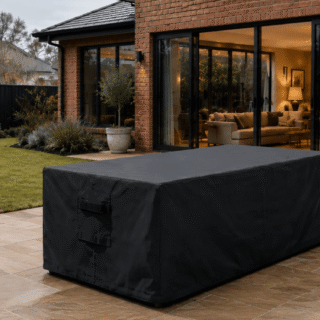
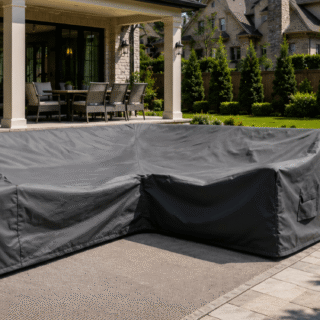
Corrosion-resistant fittings and a fabric specifically suited to coastal or marine conditions make a real difference here. If you’re investing in a full setup, matching outdoor kitchen covers built with the same coastal-grade materials to protect benchtops and storage the same way a good BBQ cover protects the grill itself.
Choosing Beyond Just Region
Climate is the starting point, but fit matters everywhere in Australia. A cover that’s too loose flaps and lets in wind-driven rain or dust; one that’s too tight strains at the seams and wears through faster. Where possible, choose a cover sized to your actual barbecue rather than a generic “one size fits most” — the fit affects both protection and lifespan more than people expect.
The Bottom Line
There’s no single best BBQ cover for Australia, because there’s no single Australian climate. What there is, though, is a clear pattern: match the cover’s fabric and features to what your region actually throws at it — humidity and airflow in the north, UV resistance in the west, versatility in the south, dual protection on the east coast, and corrosion resistance anywhere near the coast. Get that match right, and your barbecue will spend a lot more time cooking and a lot less time being replaced.


Recent Comments